
When Capital Needs a Plan
Trump’s Critical-Minerals Strategy Is Exposing the Myth of the Free Market—and Showing How Quickly the American State Can Plan an Economy When Empire Demands It

Americans have spent generations being told that governments cannot plan economies, pick industries, guarantee prices, direct investment, or interfere with the supposedly neutral operation of markets. Yet when U.S. geopolitical power depends upon rare earths, lithium, semiconductors, steel, and advanced manufacturing, those economic commandments suddenly become remarkably flexible. The emerging critical-materials strategy reveals something far more important than another debate over industrial policy: America already possesses enormous capacities for economic planning. The real question is who controls those capacities, whose interests they serve, and what kind of society they are being used to build.
The Free Market Ends Where Strategic Power Begins
For generations, American political ideology has presented the “free market” as something approaching a law of nature. Governments, we are told, should not pick winners and losers; prices should emerge spontaneously from markets; private investors should allocate capital according to expected returns; state ownership produces inefficiency; and industrial planning belongs to the failed economic doctrines of another age. These propositions have been repeated so relentlessly that they have become less like arguments than assumptions about how an economy must function.
Then the United States discovered that China had become indispensable to many of the material supply chains underlying twenty-first-century technological and military power, and Washington suddenly rediscovered economic planning.
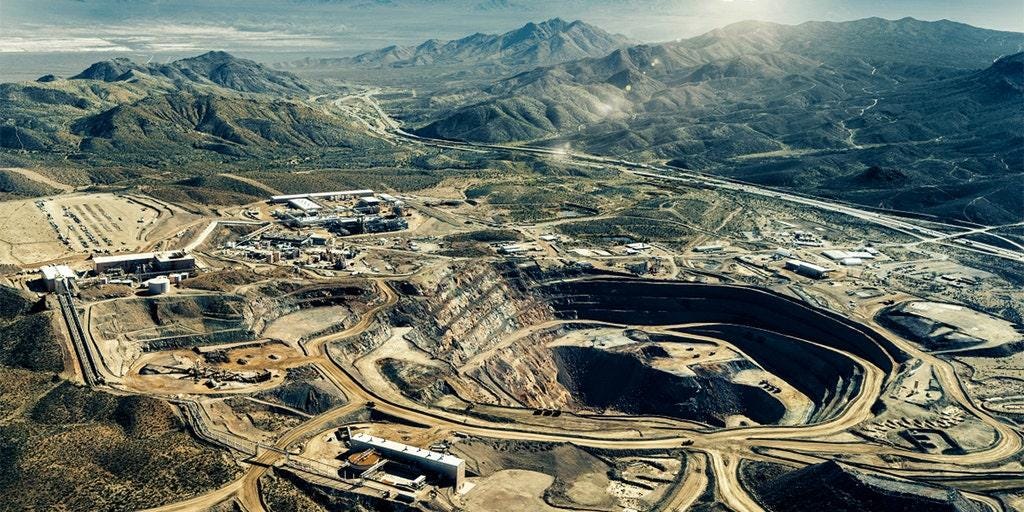
The transformation is particularly visible in critical minerals and rare earths, where the Trump administration has moved well beyond conventional subsidies toward direct equity investment, government loans, guaranteed purchasing, price floors, strategic stockpiling, tariffs, and increasing state influence over corporate decision-making. In July 2025, the Pentagon entered into an extraordinary partnership with MP Materials, operator of the Mountain Pass rare-earth mine in California. The arrangement included $400 million in convertible preferred equity, warrants, a $150 million loan, long-term purchasing commitments, and a ten-year price floor for neodymium-praseodymium, or NdPr, a crucial input for high-performance permanent magnets. The government’s own account said the arrangement could make the federal government MP Materials’ largest shareholder, with roughly a 15 percent position.
The price guarantee is particularly revealing because the Pentagon committed to supporting an NdPr price of $110 per kilogram for ten years. When market conditions cannot sustain the price Washington considers necessary to preserve strategic domestic production, the state effectively intervenes to compensate for the market’s failure to produce the desired outcome. In other words, the supposedly sovereign market remains sovereign only until its decisions conflict with the strategic objectives of the state. When market prices threaten strategically necessary production, the market is subordinated to political power.
This is clearly not laissez-faire capitalism, but neither should it be confused with socialism. What we are witnessing is something capitalism has repeatedly produced under conditions of crisis, war, technological transformation, and geopolitical competition: an increasingly explicit form of state-directed capitalist development in which public institutions assume responsibility for organizing sectors that private capital, left entirely to short-term profitability, cannot reliably construct.
Vulcan Elements and the Politics of Strategic Capital
The case of Vulcan Elements makes the emerging structure still more revealing because it brings together industrial strategy, military procurement, public financing, private investment, and legitimate questions about political influence.
In November 2025, Vulcan Elements entered a public-private arrangement intended to dramatically expand American production of rare-earth magnets. The financing included a $620 million direct loan from the Pentagon’s Office of Strategic Capital, approximately $550 million in private financing, and a $50 million Commerce Department investment. The project envisioned a domestic facility capable of producing 10,000 metric tons of magnets annually, an important strategic objective because rare-earth permanent magnets are indispensable across modern technological systems ranging from electric motors and advanced manufacturing to drones, radar, electronics, aerospace equipment, and numerous weapons platforms.
What makes the case politically sensitive is that only months before the federal financing, 1789 Capital—the venture-capital firm in which Donald Trump Jr. is a partner—had invested in Vulcan Elements. That relationship does not establish corruption, and serious political analysis should not substitute insinuation for evidence. It does, however, create an obvious conflict-of-interest concern worthy of investigation, particularly because subsequent reporting raised questions about how the federal financing moved through the government.
Members of Congress seeking an investigation cited reporting that White House adviser Peter Navarro had requested Pentagon officials approve the Vulcan financing and that the process subsequently moved unusually quickly. Lawmakers noted that the $620 million loan was the largest yet issued by the Office of Strategic Capital and questioned whether political connections had influenced the award. Vulcan, the Pentagon, and administration officials have disputed suggestions that Trump Jr. improperly influenced the decision, and the available public record does not establish that he personally directed or arranged the loan.
The larger structural issue, however, goes well beyond Donald Trump Jr. or any single allegation of favoritism. Why does an economy supposedly governed by private risk and market discipline require the state to assume extraordinary financial risk so private capital can construct strategically necessary productive capacity? And when taxpayers absorb much of that strategic risk, who ultimately captures the appreciation generated in the resulting private assets?
Those are questions about political economy rather than simply political ethics, and they lead directly into the deeper architecture now emerging around critical materials.
Socialized Risk and Privatized Accumulation
The capitalist state possesses capacities that no private corporation can remotely match. It can borrow on enormous scales, guarantee markets, impose tariffs, restructure loans, control military procurement, establish strategic stockpiles, negotiate with foreign governments, acquire corporate equity, and sustain investments whose strategic returns may take decades to materialize. When sectors essential to national power cannot reliably emerge through ordinary market incentives, the state possesses the ability to change the conditions under which those markets operate.
Lithium Americas provides another example. The federal government had already committed a $2.26 billion loan package supporting development of the Thacker Pass lithium project in Nevada. Under restructuring announced in September 2025, Washington received warrants representing approximately 5 percent ownership in Lithium Americas and another 5 percent interest in its joint venture with General Motors. The Department of Energy described the restructuring as a means of strengthening domestic critical-mineral supply chains while improving taxpayer protection.
Seen alongside MP Materials and Vulcan Elements, a pattern begins to emerge. Public institutions provide patient capital, reduce strategic uncertainty, guarantee demand, stabilize prices, absorb risks private investors may be unwilling to accept, and sometimes acquire equity in the corporations benefiting from those interventions. Private capital remains central, but its accumulation is increasingly scaffolded by the financial and political power of the state.
This is one of the recurring characteristics of mature capitalism: risk can be socialized without accumulation itself becoming socialized. The public may finance infrastructure, basic science, technological development, military procurement, loans, guarantees, and industrial reconstruction while ownership of the resulting productive assets remains substantially private. When projects fail, society can absorb enormous portions of the cost; when they succeed, private investors can capture substantial portions of the appreciation.
The contradiction becomes especially striking when placed beside conventional American economic ideology. Citizens are routinely told that government should not interfere with markets, yet the government is financing mines, acquiring corporate equity, restructuring loans, protecting industries, guaranteeing commodity prices, shaping supply chains, and directing capital toward politically selected objectives. The state can apparently plan after all. It simply discovers this capacity most readily when the reproduction of American geopolitical and military power requires it.
From Rare Earths to Intel and Steel
The pattern extends well beyond critical minerals. The Commerce Department reported that the federal government converted $8.9 billion associated with Intel grants into approximately a 9.9 percent equity stake in the semiconductor company. Meanwhile, in the Nippon Steel acquisition of U.S. Steel, Washington secured a “golden share” providing the government unusual influence over strategically significant corporate decisions. These cases are institutionally different and should not be collapsed into a single mechanism, but taken together they demonstrate that direct state involvement in ownership, financing, governance, and strategic industrial development is becoming increasingly normalized.
The important development is therefore not that private capitalism is disappearing. Quite the opposite is occurring. The American state is increasingly mobilizing its own power to reconstruct, finance, protect, and discipline strategically important sections of private capital. The distinction matters because describing every state intervention as socialism obscures what socialism actually means while simultaneously preventing us from understanding how capitalism functions during periods of intensified geopolitical competition.
The Pentagon increasingly occupies a particularly revealing position within this transformation. It is not simply purchasing finished weapons from private contractors. Through institutions such as the Office of Strategic Capital, it can increasingly help identify strategically necessary technologies, channel financing toward enterprises, reduce investor risk, create predictable demand, and influence the development of entire industrial ecosystems. The military establishment consequently begins to resemble not merely a consumer of capitalist production but an industrial coordinator operating at the intersection of national security, finance, technology, and private accumulation.
State Ownership Is Not Socialism
American political discourse has become so intellectually impoverished that virtually any government intervention in the economy can be denounced or celebrated as socialism. Marxism provides a much more useful analytical framework because it asks not simply whether the state owns productive assets but which class exercises political power through the state and toward what social purpose production is organized.
Capitalist states have owned railways, utilities, mines, airlines, banks, armaments factories, postal systems, energy companies, and countless other enterprises throughout modern history. They have nationalized industries during wars, rescued banks during financial crises, imposed price controls, rationed commodities, directed investment, and planned industrial production whenever preservation of the capitalist order required it. State ownership is therefore not inherently socialist any more than privately owned small businesses are inherently incompatible with every possible socialist transition.
The decisive issue is class power. A bourgeois state can nationalize an industry to stabilize capitalism, direct investment to strengthen national capital, guarantee prices to maintain strategic production, acquire corporate shares, or impose extensive controls over private enterprise without abolishing capitalist social relations. Socialism requires a transformation of class power, not merely a transformation of the name appearing on a stock certificate.
A socialist transition moves the commanding heights of productive property and economic decision-making toward social control exercised through institutions of working-class political power, with the social surplus increasingly directed toward collectively determined developmental priorities rather than principally toward private accumulation. The meaningful distinction is therefore not simply government versus market, because every modern capitalist economy contains enormous amounts of planning. The deeper distinction is between planning subordinated to bourgeois accumulation and planning subordinated to democratic social development.
China Changed Washington’s Calculation
The deeper force driving Washington’s transformation is China. For decades, American capital benefited enormously from the internationalization of production. Corporations moved manufacturing into lower-cost jurisdictions, financial investors gained access to new opportunities, and American consumers obtained inexpensive commodities while supply chains became increasingly globalized. China became deeply integrated into this system but did not remain merely a low-cost assembly platform. It accumulated industrial capacity, infrastructure, technological expertise, engineering talent, research capabilities, and increasingly sophisticated domestic supply chains.
Eventually the logic of capitalist globalization collided with the logic of geopolitical power.
Rare earths make this contradiction exceptionally visible. A supply chain optimized according to profitability may be economically efficient while becoming strategically intolerable when a geopolitical competitor dominates crucial stages of extraction, separation, refining, processing, or magnet manufacturing. What individual corporations consider efficient can therefore become unacceptable to the capitalist state responsible for maintaining military and geopolitical power.
Washington’s response has consequently become increasingly political. Markets are expected to produce geographically secure supply chains, but when they fail to do so the state intervenes. If domestic production cannot compete at prevailing prices, government can establish price floors. If private investors consider a project too risky, public institutions can provide loans. If companies need stable demand, the Pentagon can guarantee purchases. If strategically important corporations require capital, the government can acquire equity. If foreign competition threatens domestic production, tariffs and other restrictions can alter the market.
The market remains sovereign only for as long as its outcomes remain compatible with the requirements of state power. Once those requirements diverge, political power takes precedence.
Lenin and the Fusion of State and Capital
Lenin’s analysis of monopoly capitalism helps illuminate this development because advanced capitalism has never consisted simply of independent entrepreneurs competing through neutral markets. Capital tends toward concentration, finance becomes intertwined with industrial production, and the state becomes increasingly implicated in maintaining the political and economic conditions necessary for accumulation. Under conditions of intensified imperial rivalry, the relationship becomes still more explicit because strategically important industries cease to be merely commercial enterprises and become components of national power.
Critical minerals are therefore not simply commodities. They are material inputs into military systems, semiconductor manufacturing, robotics, artificial intelligence infrastructure, telecommunications, aerospace, energy systems, advanced manufacturing, and the wider technological base upon which contemporary geopolitical power rests. Control over these supply chains becomes inseparable from the struggle among states and capitalist blocs over technological and military advantage.
The state consequently intervenes not because it has transcended capitalism but because the reproduction of national capitalist power increasingly requires forms of planning that laissez-faire markets cannot reliably provide. From this standpoint, there is no meaningful contradiction between an administration rhetorically celebrating private enterprise while simultaneously acquiring equity stakes, guaranteeing commodity prices, financing strategic producers, and influencing corporate governance. Ideological consistency is secondary to the reproduction of accumulation and geopolitical power.
This is where the phrase “free market” reveals its ideological rather than descriptive function. Capital has never objected to state intervention in principle. It objects selectively to interventions that threaten accumulation, redistribute power downward, strengthen labor at capital’s expense, or place socially produced wealth under democratic control. State intervention that protects property, opens markets, guarantees profits, finances research, disciplines labor, secures resources, or maintains military supremacy can be readily incorporated into capitalist rule.
The Maoist Question: Planning for Whom?
Maoist analysis pushes the argument further because it insists that the existence of planning tells us almost nothing by itself about the class character of the society doing the planning. Corporations plan internally on enormous scales. Banks allocate capital according to strategic priorities. Militaries plan procurement decades into the future. Amazon coordinates immense logistics networks, Walmart manages supply chains spanning continents, and financial institutions routinely determine which sectors receive investment and which are starved of capital. Capitalism does not eliminate planning; it concentrates much of society’s planning capacity inside institutions governed by private accumulation.
The revolutionary question is therefore not whether planning should exist, because planning already permeates advanced capitalism. The question is who participates in determining the objectives of that planning, who controls the institutions performing it, and who benefits from the resulting allocation of social labor and resources.
America’s critical-minerals strategy exposes this contradiction with unusual clarity. The state has demonstrated that investment can be directed toward long-term objectives rather than immediate market signals, prices can be stabilized, strategic industries can be financed, production targets can be established, public institutions can acquire ownership positions, supply chains can be deliberately reconstructed, and market volatility can be suppressed when political leadership considers the objective sufficiently important.
Once that capacity is acknowledged, a rather uncomfortable series of questions follows. If Washington can guarantee prices to preserve rare-earth production, why is guaranteeing affordable housing dismissed as economic fantasy? If billions can be mobilized to reconstruct mineral supply chains, why is universal healthcare perpetually described as unaffordable? If strategic industries can be insulated from destructive market volatility, why must workers accept unemployment, medical bankruptcy, food insecurity, and homelessness as unavoidable consequences of economic reality? If government can coordinate production around military requirements extending decades into the future, why should democratic planning around climate adaptation, transportation, energy, healthcare, education, and housing supposedly violate immutable economic laws?
The answer is not a shortage of administrative capacity or economic knowledge. The decisive difference is class power and social purpose.
Not a Government Monopoly, but Something More Revealing
The original question of whether Trump’s critical-materials strategy represents ordinary industrial policy or something approaching government monopoly deserves a precise answer. At present, describing the emerging structure as a government monopoly would overstate the case. Private ownership remains extensive, multiple firms continue operating, private investors remain deeply involved, and federal interventions generally seek to construct or protect domestic capitalist producers rather than eliminate private competition altogether.
What is emerging is arguably more revealing: a system of state-directed strategic capitalism in which the federal government increasingly identifies critical sectors, channels public capital toward selected firms, reduces investor risk, guarantees demand, protects domestic markets, acquires selected ownership positions, and influences corporate governance in industries considered indispensable to American geopolitical power.
This system is neither classical laissez-faire capitalism nor socialist economic organization. It represents a strategic fusion of state capacity and private accumulation whose intensity is likely to grow as geopolitical competition increases. The administration’s August 2026 moves toward additional financing for graphite, tantalum, niobium, boron, and other critical-material projects reinforce that trajectory, as does the development of government-backed investment structures intended to attract additional public and private capital into mineral production.
The direction is increasingly difficult to miss. After decades in which neoliberal ideology insisted that markets should determine the geography of production, the American state is discovering that geopolitical power cannot simply be outsourced to whichever supply chain happens to generate the highest quarterly return.
When Empire Needs Something, Money Appears
The significance of this transformation extends far beyond rare earths because it exposes one of the central ideological contradictions of American capitalism. Workers have spent decades being told that governments cannot simply mobilize enormous resources to solve social problems. Universal healthcare is supposedly too expensive, large-scale public housing unrealistic, eliminating homelessness impractical, rebuilding infrastructure fiscally irresponsible, ecological transformation too disruptive to markets, and public ownership inherently inefficient.
Yet when the strategic interests of the American state require semiconductors, lithium, rare-earth magnets, steel, weapons systems, or advanced manufacturing capacity, the boundaries of economic possibility suddenly expand. Loans become available, guarantees appear, equity stakes become acceptable, price floors become rational, purchasing commitments become prudent, tariffs become necessary, public-private partnerships proliferate, and long-term economic planning becomes common sense.
This is not an accidental inconsistency. It reveals something fundamental about the political economy of capitalism. The dictatorship of capital does not oppose economic planning. It opposes the democratization of economic planning when that democratization threatens the political and economic power of capital.
The critical-minerals strategy therefore unintentionally demonstrates precisely what decades of neoliberal ideology have attempted to conceal. Markets are political institutions whose outcomes can be deliberately reshaped. Investment can be consciously directed toward long-term objectives. Strategic production can be protected from market volatility. Governments can mobilize enormous resources, restructure industries, guarantee demand, direct technological development, and organize supply chains whenever ruling institutions decide that the objective is sufficiently important.
The technical question of whether society possesses the capacity to plan large sections of economic development has already been answered. Washington itself is answering it through MP Materials, Vulcan Elements, Lithium Americas, Intel, U.S. Steel, and an expanding constellation of strategic industrial interventions.
The answer is yes.
What remains unresolved is the political question: will these extraordinary capacities remain instruments for securing private accumulation, military production, and imperial competition, or can they eventually become instruments through which working people democratically govern the productive forces their collective labor creates?
If the American state can coordinate capital, guarantee prices, restructure markets, direct investment, and mobilize billions of dollars to secure the material foundations of geopolitical power, then the claim that comparable economic coordination for housing, healthcare, food, energy, transportation, ecological survival, and human development is somehow impossible becomes increasingly difficult to sustain.
If America can plan an economy for empire, it can plan an economy for human need.
What stands between those possibilities is not technology, productive capacity, administrative competence, or some immutable law of economics. It is the oldest political question in class society:
Who holds power?
Sources and Further Reading
The U.S. Department of Energy’s September 30, 2025 announcement, “Department of Energy Restructures Lithium Americas Deal to Protect Taxpayers and Onshore Critical Minerals,” provides the government’s account of its equity interests in Lithium Americas and the Thacker Pass joint venture. Department documentation provides additional background on the federal financing supporting the project.
The White House’s Trump Administration Science & Technology Highlights: Year One documents the government’s MP Materials strategy, including its $400 million investment, prospective ownership position, ten-year NdPr price floor, and magnet purchasing commitments. MP Materials’ corporate disclosures provide additional details concerning the equity, warrants, loans, pricing arrangements, and purchasing agreements.
The Federation of American Scientists’ analysis, “Unpacking the DoD and MP Materials Critical Minerals Partnership,” provides useful analysis of the $110-per-kilogram NdPr price floor and the implications of government support when market prices remain below the guaranteed level.
Reuters’ reporting on Vulcan Elements documents the $620 million Pentagon loan, approximately $550 million in private financing, Commerce Department involvement, and the proposed 10,000-metric-ton magnet-production facility. Congressional correspondence from Senator Elizabeth Warren, Representative Jason Crow, and other lawmakers documents demands for investigation concerning Vulcan Elements, 1789 Capital, Donald Trump Jr., and White House adviser Peter Navarro. These questions should be distinguished from proof of personal intervention by Trump Jr., which has not been publicly established.
Commerce Department reporting documents the federal government’s Intel equity position and its involvement in the U.S. Steel arrangement. These cases are significant because they demonstrate that direct government participation in strategic corporate ownership and governance extends beyond critical minerals.
For the theoretical framework, V. I. Lenin’s Imperialism, the Highest Stage of Capitalism remains indispensable for understanding monopoly, finance capital, concentration, and the relationship between capitalist accumulation and imperial power, while The State and Revolution provides the essential distinction between bourgeois state ownership and proletarian political power. Mao Zedong’s On Contradiction and On the Correct Handling of Contradictions Among the People provide important foundations for understanding why state ownership or economic planning alone cannot establish the class character of a social system. Karl Marx’s Capital remains the essential starting point for understanding how accumulation, ownership, socialized production, and class power interact beneath the apparent neutrality of market exchange.
Until such time as the US accepts its new role as a major world power and quits insisting on being the dominant global hegemon it is spinning its tires. The unipolar world is gone and the multipolar world is here to stay. It should be thinking in terms of reciprocity, lifting all boats, detente and recognition we are now a global community where international cooperation is essential.
WOW, every time I click on an article by you, I know my knowledge base will increase.
Keep digging and expose!