
The Digital Currency Cold War: How China and the U.S. Are Fighting for the Future of Money
Private Profit vs Public Utility—Two Irreconcilable Visions for Financial Sovereignty in the Digital Age

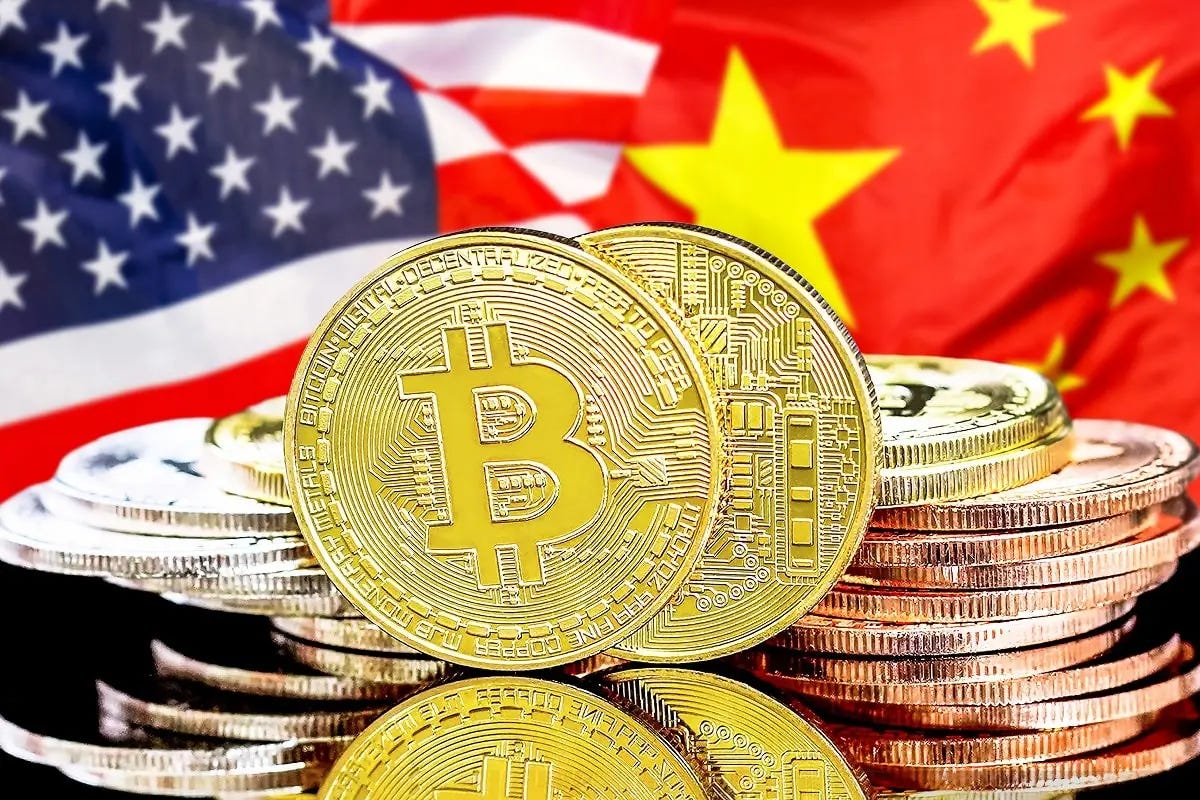
The global financial system is undergoing a silent revolution, one that will determine who controls money in the 21st century—states or corporations. At the heart of this struggle lies a fundamental divide: China’s state-backed digital yuan (e-CNY) and America’s embrace of private stablecoins represent not just technological differences, but competing ideologies of economic governance. The U.S. approach, codified in the recently passed GENIUS Act, enshrines Wall Street’s dominance by allowing private entities like Circle and Tether to issue stablecoins while explicitly prohibiting the Federal Reserve from offering a public digital dollar. China, by contrast, has deployed its digital yuan as infrastructure—a public utility designed to modernize payments while retaining state monetary sovereignty. This isn’t merely a policy disagreement; it is a battle over whether money in the digital age will serve private accumulation or collective need.
The implications of America’s stablecoin model reveal its inherent contradictions. By outsourcing monetary innovation to corporations, the U.S. has effectively privatized a core function of state power—the creation and regulation of currency. Stablecoins like USDC and Tether now function as shadow banks, operating without the oversight or reserve requirements imposed on traditional financial institutions. The result is a system where Silicon Valley and hedge funds dictate monetary policy through algorithmic fiat, while the public bears the risk of collapses like TerraUSD’s $40 billion implosion in 2022. Worse still, these private currencies have become tools of financial surveillance, with firms like Circle freezing wallets at government request—a form of privatized sanctions enforcement. This is neoliberalism’s endgame: even money itself becomes a extractive commodity.
China’s digital yuan offers a stark alternative. Designed as programmable infrastructure rather than a speculative asset, e-CNY serves two critical functions that challenge Western financial hegemony. First, it bypasses the SWIFT system, insulating China from dollar-based sanctions—a lesson learned from Russia’s exclusion after the Ukraine invasion. Second, its smart contract capabilities allow for targeted economic policies, from pandemic stimulus payments that expire if unused to poverty alleviation funds that can’t be diverted by corruption. Unlike U.S. stablecoins that amplify wealth inequality through crypto speculation, e-CNY is intentionally boring—a digital upgrade to physical cash meant for buying groceries, not gambling on DeFi platforms.
The ideological roots of this divide trace back to first principles. America’s approach reflects its fetishization of "market-driven" solutions, where even money—the lifeblood of economies—must be commodified. China’s model stems from its understanding of currency as what Marx termed the "universal equivalent," a social relation that loses its purpose if captured by private interests. This explains why Beijing has simultaneously cracked down on crypto speculation while investing heavily in blockchain’s underlying technology. The goal isn’t to resist innovation, but to subordinate it to public governance.
Historical precedent suggests China’s strategy may prove more resilient. The 2008 financial crisis demonstrated the dangers of privatized money creation through instruments like mortgage-backed securities. Today’s stablecoins recreate those risks with added volatility—Tether’s opaque reserves and Circle’s ties to BlackRock suggest the next crisis could emerge from crypto rather than subprime mortgages. Meanwhile, over 260 million Chinese already use e-CNY for everyday transactions, from subway fares to agricultural subsidies in rural villages. This isn’t theoretical; it’s a working alternative.
The geopolitical stakes are equally profound. As BRICS nations explore blockchain-based alternatives to dollar dominance, America’s reliance on private stablecoins leaves it vulnerable. Imagine a future where developing countries choose between dollar-pegged corporate tokens (with their arbitrary freezes and volatility) or state-backed digital currencies that resist Western financial warfare. The choice may increasingly favor the latter.
This contest isn’t about technology—it’s about power. Will the digital era replicate capitalism’s worst tendencies, with money itself becoming a vehicle for extraction? Or can it forge a path where financial systems serve collective needs? The answer will shape economies for decades to come.
Should digital currency be treated like electricity—a public utility—or like social media—a corporate product? Where do you see the most promising alternatives to both models? #DigitalClassWar
Sources:
Text of the GENIUS Act (2023)
People’s Bank of China e-CNY whitepapers
Bank for International Settlements reports on stablecoin risks
"Tether’s Billions" (Bloomberg investigation)
Marx’s Grundrisse (money as social relation)