
Nationalization Is Not Enough: Workers’ Control Is the Revolution
Why taking industries from private hands isn’t the goal—dismantling capitalism and putting production in the hands of the people is.

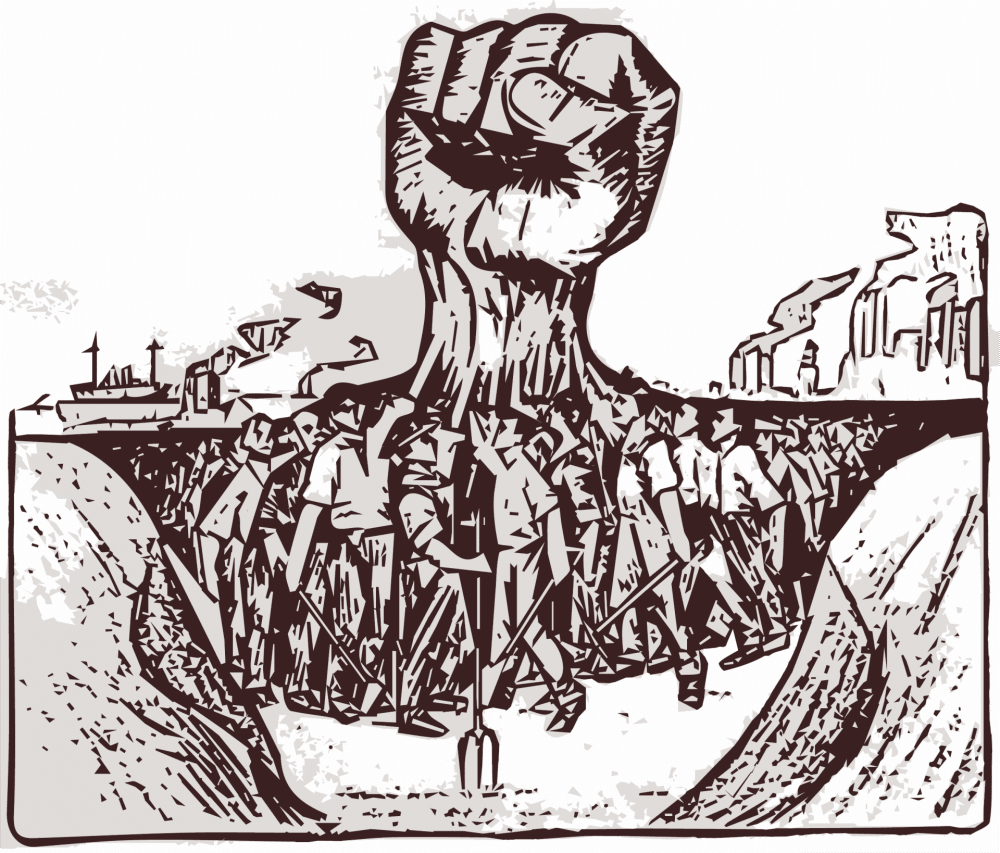
Nationalization has become a buzzword for many on the left. From energy to healthcare, people argue over whether the state should “own” key industries. The assumption is that taking over companies will solve inequality, protect public welfare, and stabilize the economy. And yes, nationalization can be a step forward in certain contexts—but it is far from the revolution.
The problem is structural. Under capitalism, ownership and control are inseparable from exploitation. Simply shifting ownership from private shareholders to the state does nothing to empower the workers who create the wealth. Without workers’ councils, democratic management, and community control, the nationalized industry still serves a top-down, hierarchical system that ultimately prioritizes efficiency, profit, or state authority over people’s needs.
Revolutionary socialists understand that the goal is workers’ control and social ownership, not just a change in signage or letterhead. Here’s how it looks in practice:
Democratic Workers’ Control
All key industries must be governed by the people who operate them. Energy grids, banks, transportation networks, communications systems, and critical manufacturing cannot remain in the hands of CEOs, private boards, or even distant state technocrats. Workers’ councils—assemblies of employees who make collective decisions—are the mechanism through which control is exercised.
This is not a vague idea. History provides examples: the Spanish Revolution of 1936, where anarchist and socialist collectives took over factories, farms, and railroads, demonstrated that workers could manage complex systems efficiently, while prioritizing social need over profit. The lesson is clear: control must rest with the creators of value, not the distant managers or the state elite.
Centralization vs Local Autonomy
Nationalization does not mean centralization of every decision. Some industries require coordination at a massive scale—energy grids, transportation logistics, and banking infrastructure, for example. These systems benefit from society-wide planning, especially when human life, ecological safety, and the flow of essential goods are at stake.
Yet local autonomy is crucial wherever feasible. Food production, housing, community clinics, and smaller manufacturing should be governed by local councils and co-ops. These decentralized units allow for innovation, flexibility, and democratic decision-making. Workers and communities collectively determine what gets produced, how it’s distributed, and how surplus value is reinvested.
The revolutionary challenge is balancing scale with autonomy. Over-centralization risks bureaucratic stagnation and disconnection from the needs of the people. Over-decentralization risks inefficiency and vulnerability to external pressures—but a system built on workers’ councils at every level, federated through democratic coordination, solves both problems.
Abolition of Private Profit and Wealth Hoarding
Nationalization without the elimination of profit is a trap. State-run capitalism simply replaces private profits with state-managed surpluses, often still allocated according to the priorities of elites. Revolutionary socialism, in contrast, demands that all surplus value be socialized.
Wealth is not money—it is life, education, healthcare, energy, and community resources. All of it must flow to society, not be siphoned off into private accounts or bureaucratic silos. The workers who produce value and the communities that sustain them must collectively decide how resources are used, ensuring they serve human need rather than accumulation.
Communities as the Measure of Value
Capitalism measures value abstractly, in profit, in stock prices, in market speculation. Socialism measures value in what actually sustains and enriches human life: clean water, public healthcare, access to education, housing, mobility, and ecological stability.
In this system, communities are sovereign in defining priorities. A local food cooperative decides how crops are grown and distributed. A hospital council determines resource allocation for patient care. Workers’ councils in manufacturing set production goals for what society actually needs, not what is most profitable.
The goal is to align production with human need, not financial abstraction. In this way, nationalization becomes meaningful, because it is anchored in democratic social ownership rather than bureaucratic administration.
The Revolutionary Horizon
Nationalization is a tool, not a destination. The ultimate objective is the abolition of capitalist property relations. Only when workers collectively control production, distribution, and surplus can society escape the constant cycles of exploitation, inequality, and ecological destruction that define capitalism.
We are not advocating for reformist tweaks to a system designed to exploit. We are advocating for workers’ power, social ownership, and the conscious organization of production for human need.
In practical terms, this means:
Nationalizing industries that require society-wide coordination.
Establishing workers’ councils to democratically manage them.
Maintaining local autonomy where possible to encourage innovation and community input.
Abolishing private profit and directing surplus value to the community.
Federating councils and co-ops to coordinate at regional, national, and even global levels without creating hierarchical, exploitative structures.
Final Thought
Nationalization without worker control is state capitalism, not socialism. The revolution is not about changing who sits in the executive suite—it is about transferring power to the people who produce value, abolishing private profit, and creating a society where communities and workers collectively decide what is produced, how it is distributed, and how surplus is used. Anything less is a continuation of the system we are fighting to overthrow.
Call to Action
We need more than discussion—we need organizing. Support workers’ councils, co-ops, and community-controlled projects. Educate, agitate, and build structures of democratic control now, so that when the revolution comes, we have the muscles to sustain it. Don’t wait for the state to hand over power—take it collectively.
Sources & Further Reading
George Orwell, Homage to Catalonia – firsthand account of workers’ self-management in the Spanish Revolution.
David Schweickart, After Capitalism – practical proposals for socialist enterprise and democratic economic planning.
Michael Albert & Robin Hahnel, Participatory Economics – theory of decentralized, participatory economic planning.
Silvia Federici, Revolution at Point Zero – links labor, social reproduction, and collective struggle.
Rosa Luxemburg, The Accumulation of Capital – critique of capitalism and the necessity of workers’ control.
to be truly free we must run our own lives
One other thought/question: social ownership is the most succinct way to say what the goal is. Why would using nationalization be necessary? Technically that word does mean state ownership or control. If we did nationalize it would just end up another flavor of what we have now like you mentioned. It feels like nationalization might cause confusion and helping people focus on social ownership and the benefits of social ownership would be most beneficial.